
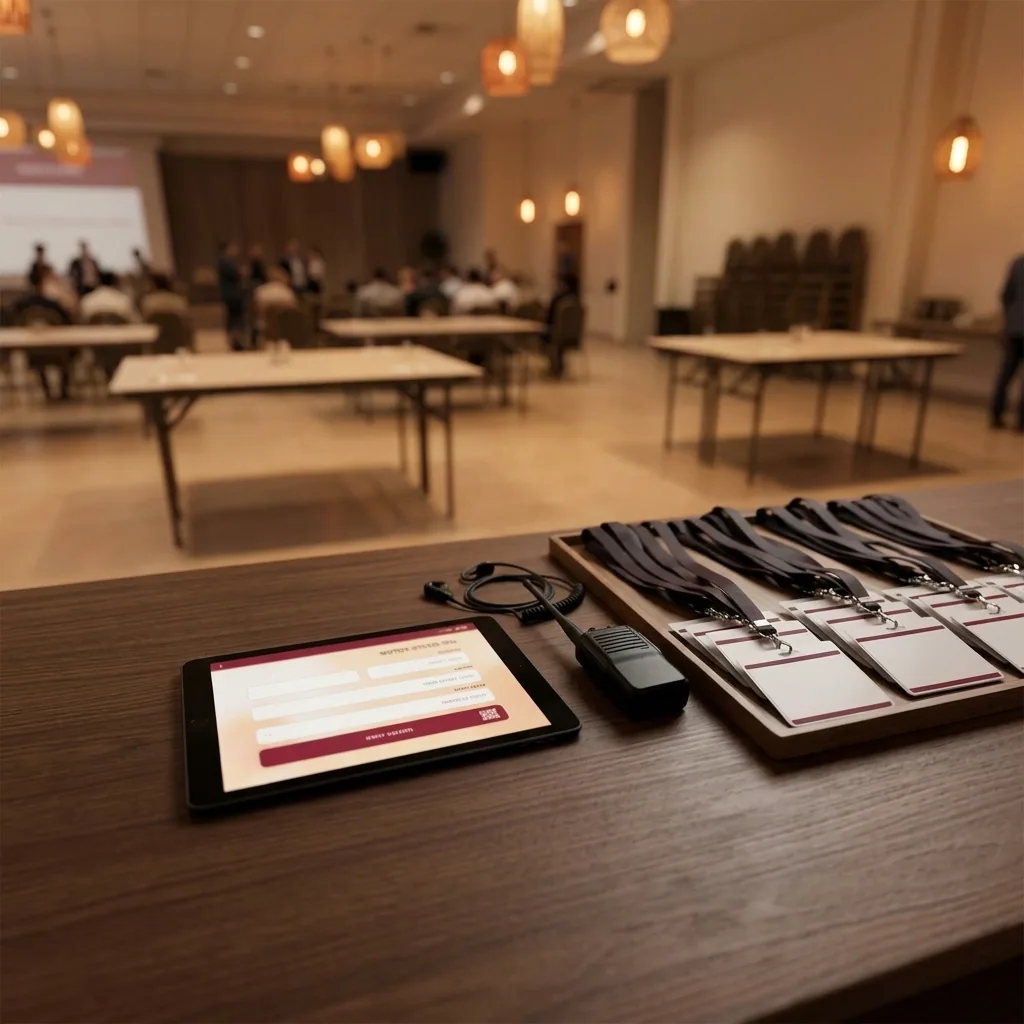
You should execute a guest list freeze the exact moment the operational cost of coordinating changes exceeds the benefit of accommodating them—typically 24 to 48 hours before an event for physical suppliers such as caterers and badge printers, or never at the software layer when deploying a unified cloud database. A guest list freeze is an operational cutoff point after which attendee data modifications are no longer accepted automatically and require exception handling to maintain parity between event production and check-in terminals. By separating physical supply-chain boundaries from dynamic cloud check-in environments, production teams eliminate check-in bottlenecks while giving corporate clients full flexibility until the moment attendees arrive at the venue.
The question of when to lock the database arises in every technical discovery call with corporate clients, and the answer hinges entirely on decoupling physical production constraints from digital runtime access.
—
Operational Timeline: Staging the Guest List Freeze Process
To prevent check-in friction on event morning, event organizers must segment the traditional cutoff into distinct operational milestones across the planning lifecycle:
72 Hours Out: Catering and Venue Guarantees
At this milestone, final headcount tallies are committed to catering and conference center teams. Adjustments here directly dictate per-seat procurement costs, requiring the client to formally sign off on non-refundable food and beverage minimums. Establish an operational safety buffer of 5% to 10% above the confirmed RSVP total to absorb unannounced C-level attendees or executive additions without renegotiating banquet contracts.
24 Hours Out: Badge Printing and Physical Collateral Cutoff
When an event features pre-printed lanyards, RFID credentials, or PVC cards produced off-site, this milestone represents the absolute physical production boundary. Any delegate registered after this point must be routed to on-site thermal printing kiosks rather than pre-collated badge racks, or processed entirely through conference check-in and QR scanning workflows without physical badges.
Check-in Phase: The Real-Time Digital Attendance Cutoff
Legacy on-premises systems required an export cutoff before loading static attendee databases onto local check-in tablets. Modern cloud-native infrastructure eliminates this requirement: the digital attendee list never freezes. An enterprise production team can swap a corporate delegate, update a misspelled executive title, or provision VIP credentials three minutes after general admission begins, propagating changes across every scanner instantly.
| Phase | Target Asset | Operational Consequence | Commercial Client Impact |
|---|---|---|---|
| 72 Hours Out | Food and beverage headcount | Closes purchasing orders with venue | Full financial liability on locked quantities |
| 24 Hours Out | Pre-printed badges and credentials | Diverts late entries to express thermal printing | Late registrants handled at exception desks |
| Event Morning | Floor layouts and seating assignments | Freezes master visual seating charts | Last-minute seat adjustments handled dynamically |
| Doors Open | Zero digital lockouts | Live bi-directional cloud synchronization | Seamless ingestion of on-site walk-ins |
—
Why Spreadsheet Version Control Breaks On-Site Check-In
The primary cause of terminal failures at enterprise check-in desks is reliance on static spreadsheets shared via email or messaging apps on event morning. When corporate marketing teams distribute a spreadsheet named Guests_Final_v2_Fixed.xlsx two hours before general admission, they trigger a catastrophic split-brain data condition.
- Data Overwrites and Merge Failures: If Kiosk A runs an offline batch imported at 07:00 and Kiosk B runs a file imported at 08:30, check-in statuses diverge immediately. Unstructured file formats lacking database validation standards, such as those formalized in the RFC 4180 CSV specification, introduce character encoding bugs, dropped unicode characters, and truncated guest rows.
- Lack of Row-Level Concurrency Locks: Spreadsheets cannot coordinate real-time record locking across concurrent terminal operators without constant network write conflicts. This limitation results in duplicate registrations, badge re-prints, and accidental status resets for delegates already in the hall.
- Front-Desk Bottlenecks: Searching text rows manually in an unindexed file inflates processing time to 45–60 seconds per attendee. Dedicated check-in scanners complete verification in less than 3 seconds per guest.
To maintain deterministic control over assigned seating when registrations fluctuate right up to keynote presentations, organizations deploy automated real-time seating management tools that eliminate double-booked tables programmatically.
—
Cloud Architecture: Engineering a Single Source of Truth
Modern event operations eliminate the static cutoff entirely by replacing offline files with a centralized Single Source of Truth (SSOT). Under this architecture, every external channel interfaces with an authoritative core database:
- Automated Two-Way Communication Channels: When an attendee modifies registration details or submits an RSVP confirmation, the transaction writes directly to the primary datastore. Integrating communication pipelines via the Meta WhatsApp Cloud API enables automated status confirmations and real-time detail updates without human manual entry.
- Bi-Directional Terminal Synchronization: On-site scanning terminals maintain low-latency connections over persistent WebSockets or optimized REST endpoints. When an event director upgrades an attendee to VIP status within the management dashboard 20 seconds prior to their arrival, every terminal scanner reflects that privilege immediately.
- Zone-Based Granular Access Control: Dynamic credential reassignment between open exhibition zones and closed boardroom tracks updates across all access controllers instantly. This pipeline connects directly to a live attendance counter and access control system, maintaining real-time occupancy metrics for venue safety and room governance.
—
Establishing an Operational SLA with Corporate Clients
Production teams should not dispute ad-hoc changes with corporate stakeholders. Instead, define an Operational Service Level Agreement (SLA) during pre-production to manage technical expectations clearly:
- Self-Service Modification Windows: Grant the client administrative portal access with role-based permissions until two hours before event opening. This delegation allows internal stakeholders to update attendees independently, eliminating uncoordinated communication threads.
- Dedicated Exception Desks: Route unlisted delegates and disputed registrations away from primary entrance turnstiles to a designated Help Desk. Main queue throughput remains uninterrupted while support operators resolve account issues.
- Tiered On-Site Processing Tariffs: For per-attendee billing contracts, establish a distinct pricing structure for records added after the 48-hour physical freeze. Transparent pricing aligns financial incentives with operational preparation timelines.
When doors close, a unified cloud architecture delivers immediate post-event transparency: automated instant event attendance reports reconcile projected attendees against actual venue scans, complete with cryptographic check-in timestamps and zone transition logs.
To modernize your event infrastructure and transition from static spreadsheets to reliable, low-latency check-in architectures, contact our engineering team to review your technical operational workflow.
—
Common questions
What is the recommended deadline for a guest list freeze?
Lock food quantities and catering minimums 72 to 48 hours prior to the event to satisfy venue contracts. Digital attendee records should not be locked at all; cloud-native check-in systems can remain open for live data synchronization up until and throughout the event runtime.
How should an event team handle a revised spreadsheet sent an hour before doors open?
Instead of replacing the production database and invalidating existing records, upload the revised sheet through an upsert pipeline in your event platform. The system matches records by unique identifier, such as phone number or email, updating altered rows while protecting existing check-in timestamps.
How are unannounced walk-in attendees handled without creating entrance delays?
Route unannounced guests to an on-site walk-in terminal away from standard queues. Front-desk staff enter the guest's credentials into a dedicated registration tablet, generating an immediate digital access badge or QR pass synced to the master cloud database without halting entrance throughput.
Can check-in kiosks function if venue internet connectivity drops?
Professional check-in systems operate an offline-first architecture with local SQLite or IndexedDB storage. Terminals continue validating credentials against locally cached lists, queuing check-in timestamps and automatically executing bi-directional conflict resolution as soon as the venue network connection restores.
From the blog
Keep reading
Branded Event Registration System: White-Label Control Without Monthly Fees
Deploy a white-label branded event registration system with pay-per-message pricing. Streamline RSVP tracking, guest QR codes, and entry operations.

Real-Time Attendance Tracking: Entrance Control and Event Zoning
Deploy real-time attendance tracking and zoning across event gates. Learn how offline-first sync, access control, and dynamic capacity prevent bottlenecks.

WhatsApp Event Screening Questions: Streamline Operations and Cut Overhead
Capture dietary needs, workshop tracks, and parking permissions directly in WhatsApp RSVPs to eliminate event-day friction and reduce coordination costs.