
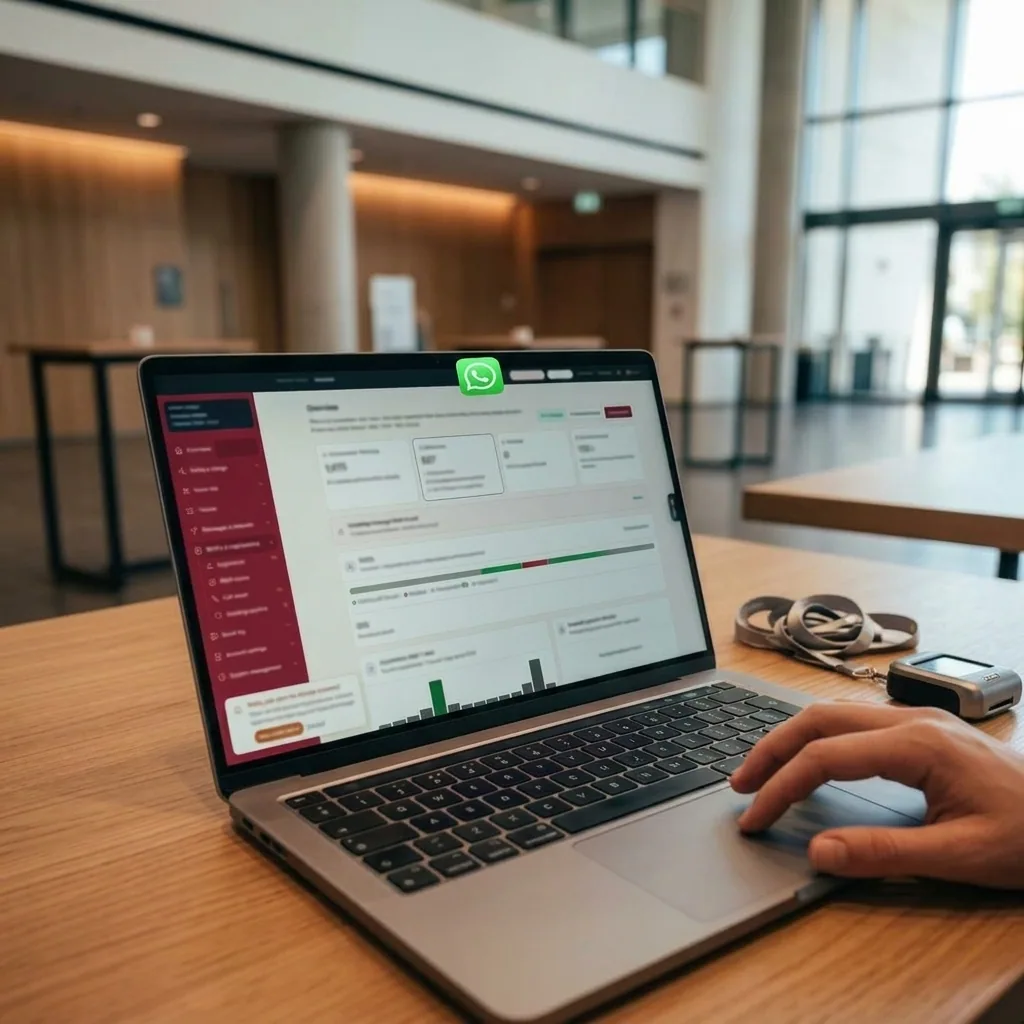
An event ticketing system is the software infrastructure that governs the complete registration, payment, entry validation, and attendance analytics lifecycle of an event. It handles initial checkout, processes payment gateways, issues verifiable digital passes, processes entrance scans via QR code, and aggregates real-time attendee data. Selecting the correct architecture prevents catastrophic bottlenecking at entry gates, eliminates error-prone spreadsheet reconciliation, and secures cash flow across production timelines.
Evaluating potential platforms requires operations leads and producers to analyze fee models, hardware scanning latency, offline data synchronization, dispute management protocols, and downstream reporting fidelity.
Fee Structures and Pricing: Understanding the True Unit Economics
Deconstructing vendor pricing is an immediate operational hurdle when selecting ticket sales systems. Headline percentages frequently mask ancillary fees that erode gross margins once transaction volume scales.
Production-grade pricing models break down into three primary layers:
- Platform fee per ticket: A percentage of ticket face value, a fixed flat fee per unit sold, or a hybrid fee schedule combining both.
- Payment gateway fees: Processing costs charged by financial acquirers. Platforms must comply with the strict encryption and transaction controls defined by the PCI Security Standards Council to mitigate cardholder data compromise and operational liability.
- Licensing or setup fees: Fixed monthly SaaS retainers or deployment costs charged regardless of actual ticket turnover.
Assessing a free ticketing platform demands particular scrutiny. These tools typically maintain zero software costs only for non-commercial registrations, or compensate by passing inflated convenience fees directly to the ticket buyer. In professional corporate conferences or enterprise summits, shifting surcharges onto attendees degrades user experience and harms executive brand perception.
Operational assessment requires calculating the Total Cost of Ownership (TCO): baseline software take rates, processing surcharges, scanning hardware rental, and SLA-backed on-site technical support.
High-Throughput Check-In: Sub-Second QR Scanning and Offline Reliability
The physical entrance gate reveals architectural defects faster than any other stage of production. A queue of hundreds of attendees stalled outside a plenary session creates logistical gridlock, disrupts executive agendas, and damages client confidence. Digital ticket delivery is merely half the workflow; rapid ingress validation under constrained network conditions is the rest.
A resilient online ticket sales infrastructure includes a standalone scanner application compatible with standard mobile devices or dedicated enterprise sleds. Gate throughput depends on response times: capturing and authenticating an encrypted 2D barcode against local or remote registers must resolve in under one second.
At high-density venues, local cellular towers routinely saturate. A reliable platform maintains operational continuity through localized caching, writing encrypted local credential databases directly to scanning devices. The system executes uninterrupted check-ins locally and initiates bidirectional ledger reconciliation as soon as network packets resume. Executing three mandatory checks before doors open confirms that all gateway nodes are synchronized and ready for production ingress.
Provisioning passes via native digital wallet tickets eliminates time lost to attendees searching email attachments or low-brightness screenshots, maintaining rapid terminal clearance.
Fraud Mitigation, Duplicate Passes, and Chargeback Defense
For high-demand productions, enterprise gatherings, and live performances, credential duplication and screenshot forwarding represent significant financial and operational exposures. Two individuals presenting identical credentials at different turnstiles triggers manual reconciliation while lines compound behind them.
Modern platforms resolve authentication abuse using three architectural mechanisms:
- Dynamic rolling QR codes: The verification token changes every few seconds within authenticated client containers, neutralizing static screengrab distribution.
- Atomic single-use state switching: Scanning a barcode transitions its global state to validated instantly across all connected local and cloud ledgers, blocking parallel entry attempts across disparate gates.
- Dispute and fraud logging: Logging source IP addresses, checkout telemetry, device fingerprints, and SMS authentication payloads builds defensible audit histories. Official documentation for Stripe Disputes confirms that comprehensive digital audit trails offer the highest probability of successfully challenging illegitimate cardholder chargebacks.
Disciplined validation engineering eliminates extensive post-event financial disputes and protects vendor relationships.
Self-Service Reallocations, Name Adjustments, and Automated Refunds
Corporate event management involves continuous roster adjustments. Corporate delegates rotate, travel policies shift, and budget line-items evolve. If an event ticketing system lacks self-service ticket modification, operational personnel become burdened with manual email exchanges and spreadsheet updates.
High-efficiency registration platforms deploy attendee self-management portals:
- Direct ticket reallocation: Primary purchasers reassign attendee credentials through secure personal links without organizer intervention.
- Configurable refund matrices: Programmed refund rules—such as full reimbursement up to 14 days prior to opening, with tiered reductions thereafter—trigger automatic merchant refunds and programmatic QR invalidation.
- Direct mobile dispatch: Re-issuing validated credentials directly to attendee smartphones. Utilizing sending invitations via WhatsApp with a QR code ensures direct, inbox-agnostic delivery that sidesteps corporate spam filters.
Real-Time Attendance Telemetry and Post-Event Reporting
Post-event stakeholder debriefs demand defensible operational metrics. Enterprise event sponsors, marketing leadership, and executive teams require accurate visibility into show rates, peak gate congestion hours, and conversion efficiency across specific tier categories.
Enterprise platforms replace legacy spreadsheet consolidation with real-time operational telemetry. Essential metrics include throughput cadence per lane, category-level segmentation (such as VIP, General Delegate, and Exhibitor), and unredeemed registration rosters. Delivering an instant event attendance report for clients validates contract performance and accelerates debrief reporting.
Evaluation Checklist for Event Ticketing Systems
Review candidate platforms against this operational matrix before committing your production infrastructure:
| Evaluation Vector | Core Engineering Question | Platform Benchmark |
|---|---|---|
| Fee Transparency | What is the total effective cost per ticket, including gateway processing? | Zero hidden refund clawbacks; predictable pass-through or bundled interchange fees. |
| Validation Latency | What is the end-to-end device scan time at the gate? | Under 1,000ms per scan across concurrent verification terminals. |
| Offline Resilience | How does validation function during a total network failure? | Encrypted on-device credential storage with automatic background ledger sync. |
| Credential Integrity | How are duplicate screenshots and unauthorized sharing blocked? | Dynamic rolling barcodes or immediate network-wide state invalidation. |
| Self-Service Portals | Can attendees modify badge information and transfer tickets autonomously? | Secure self-service delegate portals requiring no manual agency intervention. |
| Distribution Channels | Which delivery protocols are supported? | Email, direct SMS/messaging integration, and Apple/Google Wallet integration. |
| Analytics and APIs | Is telemetry easily exported to external databases and CRMs? | Native webhook endpoints, REST APIs, and automated CSV export engines. |
Selecting the right ticketing platform directly affects attendee arrival experiences, gate staffing requirements, and the integrity of post-event reporting. Prioritize platforms that combine transparent unit economics, validated offline reliability, and automated delegate self-service.
If you are planning an upcoming conference or high-volume corporate gathering, contact our engineering team to audit your registration architecture and optimize your ingress operations.
Common questions
What is the difference between a platform fee and a payment processing fee?
A platform fee pays for the software services, including ticket inventory management, gate-scanning mobile applications, analytics infrastructure, and registration landing pages. A payment processing fee is charged by the acquiring bank or merchant payment gateway to settle credit card transactions between the buyer and organizer accounts. Some platforms package both into a single transaction fee, while others allow organizations to connect their own merchant accounts.
How do event check-in systems maintain scanning during an internet outage?
Production-grade systems deploy offline-capable mobile check-in applications that synchronize local, encrypted registration caches to device storage prior to gate opening. When local cellular networks drop, devices authenticate tickets against this internal memory rather than relying on external web requests. Once internet access is restored, the local scanner broadcasts checked-in records back to the central database to sync remaining gates.
Can commercial conferences safely run on free ticketing systems?
Free systems are suited for low-stakes, non-revenue events with minimal security requirements. For enterprise corporate conferences, free platforms typically shift high service fees directly onto ticket purchasers, show third-party branding or advertising during checkout, and limit critical features like offline scanning, custom attendee data capture, and live client reporting. Professional events require branded, high-throughput systems.
How do ticketing systems prevent unauthorized pass sharing?
Ticketing systems prevent unauthorized credential transfers by generating dynamic QR codes that regenerate every few seconds within verified wallet apps, rendering static screenshots useless. Systems can also tie credentials directly to SMS verification, restrict entry passes to individual mobile phone numbers, or mandate manual identity matching at physical registration desks for high-security areas.
From the blog
Keep reading
Branded Event Registration System: White-Label Control Without Monthly Fees
Deploy a white-label branded event registration system with pay-per-message pricing. Streamline RSVP tracking, guest QR codes, and entry operations.

Guest List Freeze: How to Manage Last-Minute Changes in Corporate Events
Learn when to enforce a guest list freeze for corporate events, how to handle last-minute attendee updates, and how cloud sync prevents check-in failure.

Real-Time Attendance Tracking: Entrance Control and Event Zoning
Deploy real-time attendance tracking and zoning across event gates. Learn how offline-first sync, access control, and dynamic capacity prevent bottlenecks.