
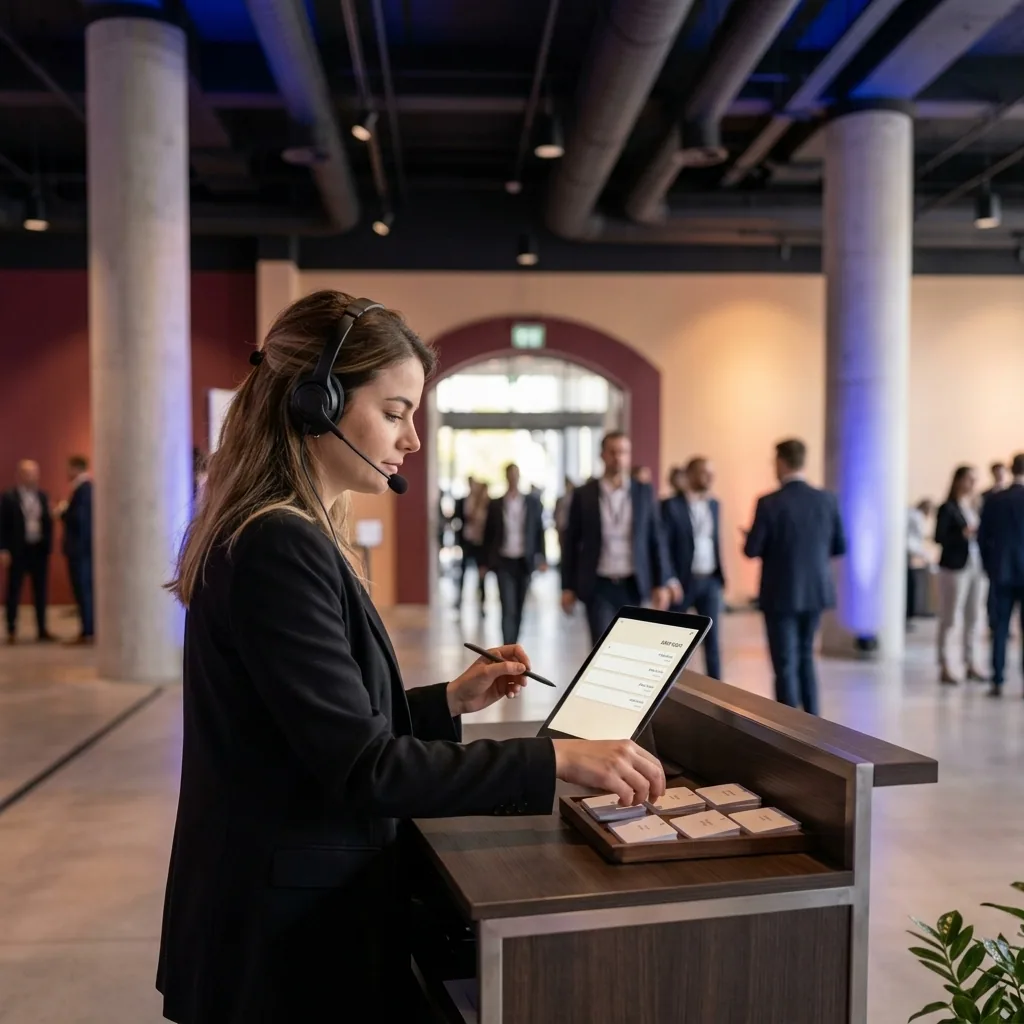
Real-time attendance tracking provides event production teams with instant, authoritative visibility into guest arrivals, live venue headcount, and physical distribution across designated sub-zones. Rather than relying on visual approximations, two-way radio updates from gate staff, or fragmented spreadsheets, entry telemetry synchronizes directly from barcode and QR scanners to let operations leads make data-backed adjustments on the fly. A modern access control platform verifies attendee credentials against a centralized cloud database while handling local check-in throughput. When an event features multi-track layouts—such as concurrent breakout halls, VIP lounges, closed networking lounges, or limited-capacity workshops—the operational objective shifts from simple check-in validation to dynamic capacity management.
Why Live Headcount Telemetry Replaces Radio Check-Ins
Corporate event stakeholders routinely request immediate operational numbers: "How many guests have entered?", "Can we open the main auditorium?", and "How many food covers should the caterer stage for the opening session?". When gates operate on paper lists or isolated device caches, production managers must call individual gate attendants over radio channels, tally headcounts manually, and deliver delayed estimates to clients.
Transitioning to automated workflows using conference RSVP and check-in platforms resolves these communication delays. A single credential scan transmits a payload to the primary event database, reflecting across the operational dashboard in fractions of a second. Instead of continuous radio traffic, the operations lead monitors aggregate arrivals per minute, show-up rates against registered attendee lists, and entry pressure across individual access gates.
Live entry telemetry also coordinates front-of-house logistics with catering and room allocations. When catering managers observe confirmed arrivals over the first 45 minutes, they can delay or stage buffets incrementally, preventing food waste and unneeded service costs. Concurrently, synchronizing entrance metrics with real-time seating management systems guarantees that hostesses allocate table seating exclusively for attendees verified as physically present.
| Operational Metric | Manual Check-In / Split Sheets | Cloud-Based Real-Time Attendance |
|---|---|---|
| Stakeholder Query Latency | 5–15 minutes (radio calls / messaging) | 0 seconds (live dashboard display) |
| Occupancy Accuracy | Approximation with frequent double-counts | Exact single-record verification |
| Inter-Gate Synchronization | Manual phone calls to check credential reuse | Millisecond-level multi-device record locking |
| Zone Segmentation (Zoning) | Manual name tag verification at doorways | Scanned permission lookup per attendee segment |
Data Architecture: Offline-First Synchronization and Gate Throughput
Large corporate conferences and exhibitions frequently take place in convention centers, subterranean exhibition halls, or structural hangars characterized by poor cellular reception and severe radio frequency (RF) congestion caused by dense device concentration. In these environments, gate validation cannot rely on synchronous, blocking HTTP requests for every scanned credential without introducing unacceptable entry delays.
Reliable infrastructure utilizes an offline-first architecture. Each scanning terminal downloads an encrypted local database (using SQLite or local browser storage) containing valid access credentials and access rules. Primary authentication occurs locally on the client hardware in under 100 milliseconds, after which the state change is pushed to the server over a low-latency protocol such as the WebSocket API or queued REST calls. If the physical venue loses internet connectivity entirely, scanners continue processing arrivals uninterrupted, storing entry events in a local transactional queue and synchronizing bidirectional updates once network connectivity resumes.
Zone Segmentation and Granular Access Permissions
In multi-track technical conferences, executive leadership summits, and trade expos, access levels vary significantly across ticket tiers. Physical zoning establishes logical boundaries across event spaces to enforce access parameters:
- Main Exterior Gates: Confirms baseline event registration, locks the master ticket status, and triggers credential badge printing.
- VIP Lounges and Closed Keynotes: Dedicated scan points cross-reference attendee segment rights, rejecting standard credential holders.
- Capacity-Constrained Workshops: Enforces a strict seat ceiling, prompting the terminal operator as soon as physical room limits are met.
- Catering and Dining Areas: Manages meal access entitlements to prevent duplicate entries using the same pass.
Distributing credentials through smartphone wallets streamlines these physical transitions. Deploying digital wallet passes for event entry allows attendees to access dynamic QR codes directly from their home screen, cutting gate search times and avoiding lost email attachments at access points.
Information Security and Real-Time Identity Management
Modern access control must mitigate unauthorized credential duplication and ticket forwarding. Robust architectures implement single-use tokens or dynamically regenerating visual codes backed by cryptographic signing. Aligned with standards established by the OWASP Mobile Application Security project, validation keys are verified against server records during the initial scan and immediately flagged to neutralize passback attempts across other entry points.
Additionally, identity management limits administrative exposures during field operations. Scanning hardware should enforce Role-Based Access Control (RBAC). A terminal assigned to a catering distribution station only carries permission to read and toggle catering allowances, while an executive dashboard node retains full observational permissions across overall venue flow, access logs, and occupancy percentages.
Post-Event Reconciliation and Stakeholder Reporting
Consolidating event records manually after teardown often requires extensive data manipulation. Merging check-in logs from disconnected hardware, deduplicating guest lists, and assembling executive summaries introduces reporting latency and manual error.
Maintaining a unified database across all gates allows the management system to compile comprehensive analytics at the conclusion of the event. Production directors can deliver verified post-event reporting that details overall attendance, arrival distribution curves, gate-by-gate processing times, and session engagement levels without relying on post-hoc spreadsheet cleanup. For an end-to-end framework on delivering these insights, review our guide to instant event attendance reports.
If you are planning an upcoming conference or multi-zone corporate gathering, our technical team is available to review your gate infrastructure and configure your access control deployment.
Common questions
What happens when an internet outage occurs during gate check-in?
Offline-first access control software stores the entire attendee credential database in local device memory, enabling scanners to validate tickets instantly without active connectivity. When an internet drop occurs, check-in operations continue at full speed. Terminal devices write scan records to a local transactional queue and automatically sync the data back to the central server as soon as the network connection is restored.
How does real-time attendance tracking prevent duplicate ticket usage?
When a ticket or QR code is scanned, the entry terminal logs that credential as used across the primary system. If a duplicate copy or screenshot of that credential is presented at another gate, the system detects the existing check-in timestamp within milliseconds, triggers an audio-visual warning on the terminal, and denies entry to the secondary user.
Can access control enforce different entry permissions across sub-zones?
Yes. The system utilizes zone segmentation, linking access rights directly to each attendee profile. Specialized scanning devices stationed outside VIP areas, restricted roundtables, or technical workshops validate whether an incoming pass holds the required segment permission, permitting authorized guests while instantly alerting gate staff to unauthorized badge tiers.
From the blog
Keep reading
Event Management System: The Complete Operational Guide for Producers
Master event logistics with a modern event management system. Automate WhatsApp RSVPs, QR check-ins, multi-zone access control, and seating.
Event Management Software No Subscription: White-Label Control
Discover event management software with no subscription fees. Run white-label registration, automated WhatsApp RSVPs, and live QR check-ins per event.
Managing Multiple Events Simultaneously: 3 Operational Rules for Peak Production Weeks
Learn how to manage multiple events simultaneously without errors using unified data infrastructure, role-based access, and automated check-ins.