

Scheduling automated WhatsApp event ticket delivery exactly two hours before an event begins eliminates entrance bottlenecks by placing the attendee access pass directly at the top of their messaging feed upon arrival. This proactive push removes the friction of searching through crowded email inboxes, avoids attendant frustration, and prevents queue build-up at registration desks. WhatsApp event ticket delivery is an automated distribution architecture where an event management platform dispatches a dynamic digital scan code directly to guest devices within a pre-calculated, narrow operational window right before venue doors open.
Corporate summits, professional conventions, and large-scale enterprise productions succeed or fail on the arrival experience. When hundreds of participants arrive simultaneously during peak registration windows, an administrative delay of just 15 to 30 seconds per attendee creates cascading queues that can stretch across lobbies. Replacing static confirmation methods with a time-triggered, mobile-first delivery system shortens the physical interaction path and delivers real-time synchronization across check-in infrastructure.
The Bottleneck at the Gate: Email Inefficiencies and Desk Congestion
In conventional registration pipelines, entry tickets and confirmation vouchers are distributed immediately after form submission—often days, weeks, or months before the actual gathering. When guests reach the venue gate, they must execute a multi-step digital retrieval process: unlock their device, launch an email client, search for the organizer or event name, locate the correct email thread among logistical updates, and often download an uncompressed PDF to reveal a barcode. This sequence routinely consumes 20 to 45 seconds per attendee.
Multiplying that latency across hundreds of guests arriving inside a 30-minute peak window inevitably overwhelms front-desk attendants. Staff members end up reverting to manual guest lookups on spreadsheets or local registration terminals by first and last name. This fallback spikes administrative error rates, duplicates entries, and stresses staff. Proper operational planning for event check-in stations requires high throughput rates that are only achievable when participants arrive with access codes primed on their screens.
Why Two Hours Prior? The Mechanics of Attendee Arrival Windows
The 120-minute pre-event dispatch window is grounded in behavioral transit patterns rather than arbitrary timing. In corporate and enterprise events, this period aligns directly with attendee departure preparation, transit initiation, and final scheduling checks. Pushing credentials 24 hours in advance allows the message to drown beneath subsequent personal chats, while delivering passes 15 minutes before the event catches attendees while driving or parking, when mobile interaction is unsafe or impossible.
| Dispatch Window | Attendee Status in Transit Timeline | Impact on Entrance Check-In Queue |
|---|---|---|
| 24 hours prior | Normal daily routine; working or traveling | Message is marked read and pushed down chat lists; requires manual search at gate |
| 2–3 hours prior | Final transit prep, commuting, boarding trains | Message sits at top of messaging app; instant single-tap access upon entry |
| 15–30 minutes prior | Actively driving, navigating parking structures | Attendee cannot check notifications; increases gate delays and unretrieved passes |
Coordinating delivery with real-world transit creates an immediate association between the notification ping and the physical act of arriving at the gates. Guests register the alert while getting into vehicles or boarding transit, know their pass is waiting, and require only a single tap on an already-open application when presenting credentials to the scanning team.
Optimizing Ticket Dispatch to Cut Queue Waiting Times
Automated dispatch timing also acts as an operational triage mechanism for event production teams. A WhatsApp dispatch sent two hours prior commonly packages vital logistical updates alongside the digital badge, including direct links to designated parking structures, VIP drop-off coordinates, or specific terminal entrance gates. When attendees receive granular transit instructions at the exact moment they need them, vehicle and pedestrian traffic routes smoothly across multiple checkpoints rather than overloading a single entrance.
Furthermore, this precision drop drastically reduces inbound inquiries to registration managers on event morning. Common distress messages like "I cannot find my ticket" or "resend my confirmation" drop off, because the newest message in the attendee's messaging app displays their access pass clearly. Eliminating support tickets frees staff to concentrate on stage readiness, network stability, and gate infrastructure.
Distribution Architecture: Integrating the WhatsApp Business API
Broadcasting thousands of credential payloads within a tight operational window without carrier filtering or rate limiting requires enterprise cloud infrastructure connected to the official Meta for Developers WhatsApp Cloud API. Attempting mass delivery using standard consumer applications or unverified broadcast scripts results in immediate number bans, leaving gate operations stranded without a distribution channel.
A reliable distribution architecture relies on three primary components:
- Pre-Approved Message Templates: Structured service messages utilizing dynamic parameters for attendee names, seat assignments, tier classifications, and personalized credential links.
- Task Queue Orchestration Engine: Scalable background worker queues (such as Redis-backed job processors) that meter outgoing message batches to comply with Meta tier-based rate limits and prevent socket exhaustion.
- Bidirectional Webhook Listeners: Real-time listeners that process receipt telemetry across four distinct states—sent, delivered, read, or failed—flagging incorrect numbers for on-site manual triage.
Maintaining strict compliance with enterprise messaging policies and data handling and transmitting only requested, transactional event information maintains sender quality scores, avoids carrier spam flags, and guarantees near-instant delivery rates.
On-Site Scanning, Decryption, and Offline Network Resilience
Presenting credentials on a client device requires venue intake terminals that decode access payloads in fractions of a second, without absolute reliance on cloud connectivity. The industry standard utilizes a 2D Matrix Barcode (QR Code) configured under GS1 Barcode Standards, storing a cryptographically signed payload that resolves directly against a localized credential index.
During high-density gatherings, commercial mobile networks frequently saturate due to device concentration in a single cellular tower cell. Scanning hardware must therefore operate on a local offline-first database architecture. When a ticket is delivered via WhatsApp, the rendered image and embedded payload are cached in the device's hardware memory upon receipt, ensuring the attendee can retrieve the pass even inside shielded convention basements or remote exhibition spaces with zero carrier signal.
Executing high-speed check-ins in complex physical settings is detailed further in our breakdown of rugged outdoor check-in operations, which addresses local local-area network fallbacks, dedicated high-speed optical laser scanners, and balanced queue topologies for high-volume gates.
Data Accuracy: Real-Time Analytics and Post-Event Reconciliation
Optimized ticket delivery delivers value beyond eliminating physical lines; it directly impacts the fidelity of executive attendance telemetry. When every participant is scanned within two seconds of stepping up to a portal, database records reflect precise, synchronized occupancy metrics throughout the venue.
Key operational benefits of real-time data synchronization include:
- Synchronized Session Scheduling: Technical event directors observe real-time gate velocity curves, allowing them to initiate keynote plenaries without stranding attendees in registration lines.
- F&B and Floor Resource Reallocation: Accurate tracking of actual arrivals versus total registrations prevents food and beverage waste and allows floor managers to deploy personnel to high-traffic breakout halls.
- Instant Stakeholder Reporting: Production teams can generate an instant client attendance report immediately following the entrance rush, replacing days of post-event spreadsheet cleanup and duplicate record reconciling.
Automating the credential push transforms event check-in from a slow administrative hurdle into an invisible, background utility. If you are preparing an upcoming conference or multi-track corporate summit, contact our technical team to audit your entrance architecture and implement low-latency registration workflows.
Common questions
How much check-in time does WhatsApp ticket delivery save at registration desks?
Presenting a digital ticket directly from an active WhatsApp message reduces attendee processing time from an average of 35 seconds down to under 5 seconds. Bypassing manual email inbox searches, file downloads, or printed name lookups eliminates approximately 30 seconds of operational friction per attendee, preventing long lines from accumulating during peak morning arrival windows.
What happens if an attendee entered the wrong phone number or does not receive the message?
If a guest fails to receive their WhatsApp access pass due to an invalid phone number or localized messaging restriction, desk staff utilize an offline-synced fallback terminal. Attendants query the attendee's last name or corporate email address directly against the synchronized database, verifying their identity and issuing a credential in seconds without impeding adjacent automated scanning lanes.
Can sending thousands of WhatsApp tickets simultaneously trigger spam blocks?
Bulk delivery of ticket credentials will not trigger spam flags or number bans when executed through the official Meta WhatsApp Cloud API using pre-approved transactional utility templates. Certified API connections operate under designated tier-based messaging thresholds that protect sender reputation, ensuring high delivery throughput without the risks associated with consumer broadcast tools.
How do mobile tickets work if the venue suffers from poor cellular reception?
Because media received over WhatsApp is automatically stored in local smartphone cache memory upon receipt, attendees can display their QR code passes even when cellular service drops inside the venue. Simultaneously, entrance scanners operate against locally cached databases over a dedicated local area network, allowing continuous scan validation without external internet access.
From the blog
Keep reading
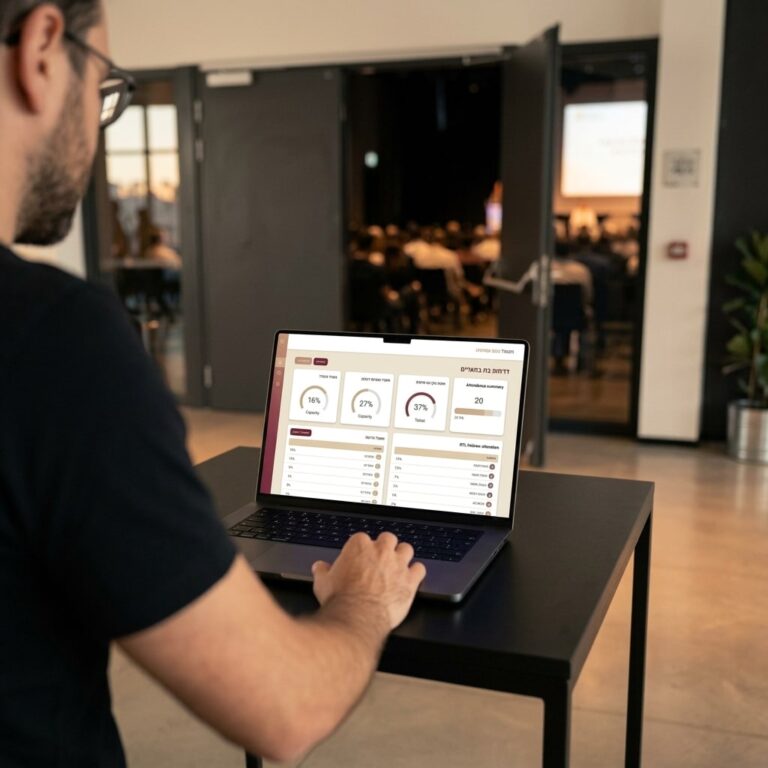
Event Attendance Report in Real Time: Closing Conferences Without Spreadsheet Chaos
Generate an instant event attendance report with real-time cloud check-in sync. Eliminate manual spreadsheet cleanup and deliver branded client metrics.

Digital Wallet Event Tickets: How Mobile Passes Eliminate Entrance Queues
Learn how digital wallet event tickets in Apple and Google Wallet eliminate entrance queues through automated lock-screen triggers and offline reliability.

Real-Time Attendance Tracking: Live Event Control and Zone Access
Learn how real-time attendance tracking and WebSocket sync enable live crowd control, zone management, and frictionless enterprise event operations.