
Real-Time Attendance Tracking: Live Event Control and Zone Access
During a large-scale corporate event or multi-track conference, one of the most frequent questions production managers hear over the radio is: "How many people are in the room right now?" When managing entry gates with printed spreadsheets or manual tally counters, answering this question requires phone calls, station checks, and unnecessary delays. Deploying real-time attendance tracking provides an exact, instant operational picture, eliminates guesswork across gates, and enables production teams to make logistical decisions based on live data.
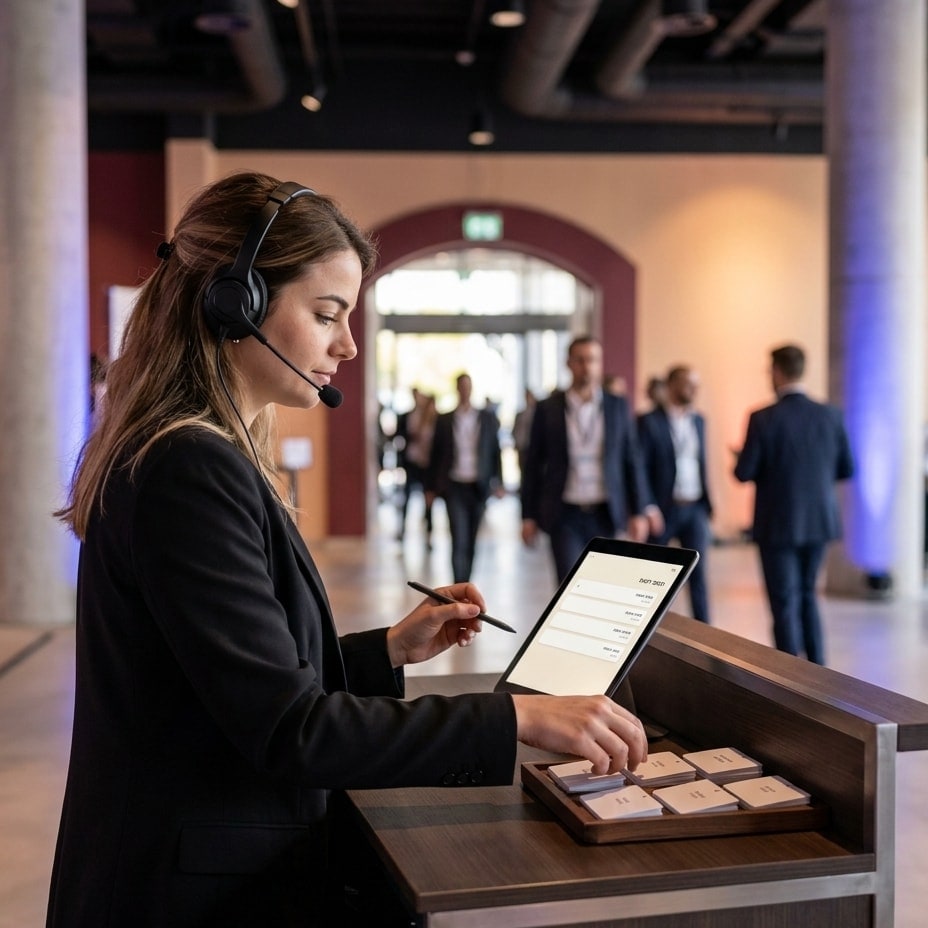
In this guide, we break down the engineering mechanisms behind distributed attendance tracking, examine how to enforce access control across zoned venues (such as VIP lounges, breakout sessions, and exhibition halls), and explain how a resilient data synchronization architecture prevents bottlenecks during peak arrival windows.
The Operational Problem: Information Gaps Between Gates and Venues
In complex events, multiple operational variables converge during attendee arrival:
- Concentrated peak hours: A significant percentage of attendees arrive within a narrow 30-to-45-minute window.
- Multi-zone segregation: Guests move between the primary plenary hall, technical workshop rooms, sponsor exhibition floors, and capacity-limited VIP lounges.
- Catering and staffing schedules: Operations leads must coordinate meal service, breakout seating, and security deployments based on actual physical headcount, not initial registration numbers.
When gate scanners fail to synchronize with a central database in real time, operational blindness follows. Production leads struggle to decide whether to hold the keynote, and corporate stakeholders lose confidence in gate throughput. To optimize scanning throughput at the main perimeter, consult our guide on how to calculate event check-in stations to eliminate registration lines during peak arrivals.
Synchronization Architecture: How Real-Time Attendance Monitoring Works
For entry data from dozens of distributed scanners to populate a central dashboard without noticeable latency, the system requires an architecture based on bidirectional communication protocols.
Rather than relying on recurring server polling every few seconds—which saturates mobile networks and introduces reporting lag—modern platforms implement persistent connections using the WebSocket protocol or managed Publish/Subscribe brokers. The moment a handheld terminal scans and validates a credential, the transaction writes to the database and broadcasts instantly to all active operational dashboards.
| System Component | Architectural Role | Operational Challenge | Engineering Solution |
|---|---|---|---|
| Mobile Scanning Station | Participant identification and credential validation | Fluctuating cellular and Wi-Fi connectivity | Offline-first architecture with queued local sync |
| Central Synchronization Node | De-duplication and global counter aggregation | Preventing badge pass-backs across concurrent gates | Atomic locks and transactional consistency in the database |
| Production Dashboard | Live telemetry, aggregate counts, and velocity metrics | High-frequency concurrent read requests | Event-driven UI updates via reactive streaming |
Managing Access Control Across Restricted Zones
Enterprise events rarely feature a single unified gate. A standard industry conference often requires general access credentials for the exhibition, specialized entitlements for technical breakout sessions with hard occupancy limits, and VIP privileges for private networking dinners.
Zone-Based Permissions and Dynamic Attendance Counting
Effective perimeter management requires explicit participant grouping and deterministic admission rules:
- Zoned perimeter scanning: Gate staff stationed outside a specific breakout hall scan the credential, prompting the local client to validate session entitlements instantly.
- Enforcing strict capacity caps: Production teams define maximum occupancy thresholds per room. The system rejects scans once room capacity is reached and flags hall saturation on the management dashboard.
- Bidirectional ingress and egress tracking: In areas with continuous turnover, recording exits recycles available seats into the active pool, keeping live headcount figures completely accurate.
Enforcing security standards such as OAuth 2.0 ensures that every scanning terminal and handheld reader authenticates securely against the backend over encrypted channels, preventing unauthorized device spoofing on public venue networks.
Operational Benefits for Event Production Teams
When live attendance telemetry is accurate and accessible throughout the event:
- Stakeholder transparency: Clients and executive sponsors receive dedicated view-only dashboard links displaying real-time arrival counts, eliminating constant status inquiries to the production desk.
- Catering efficiency: Operations leads provide exact, live headcounts directly to venue banqueting teams, preventing unnecessary meal preparation and controlling food waste costs.
- Instant post-event reporting: The moment the event concludes, the system exports a granular reconciliation report showing arrival curves, check-in velocity, and cross-hall flow distributions.
Robust operational control begins with continuous venue visibility that replaces assumptions with verified telemetry. 📊
If you are planning an upcoming conference or enterprise gathering, contact our engineering team to review your venue requirements and deploy a resilient real-time access control architecture.
Keep reading

WhatsApp Event Ticket Delivery: Strategic Timing for Seamless Check-In
Deliver WhatsApp event tickets two hours before start time to eliminate check-in queues, prevent email searches, and streamline on-site operations.

Instant Event Attendance Report: How to Wrap Up B2B Conferences Without Spreadsheet Chaos
Generate an instant event attendance report without manual spreadsheets. Learn how real-time cloud check-in delivers branded client reports in minutes.
How to Calculate Event Check-In Stations: 3 Operational Rules to Prevent Queues
Learn how to calculate event check-in stations using peak flow rates and service time formulas to eliminate registration queues at your next conference.