
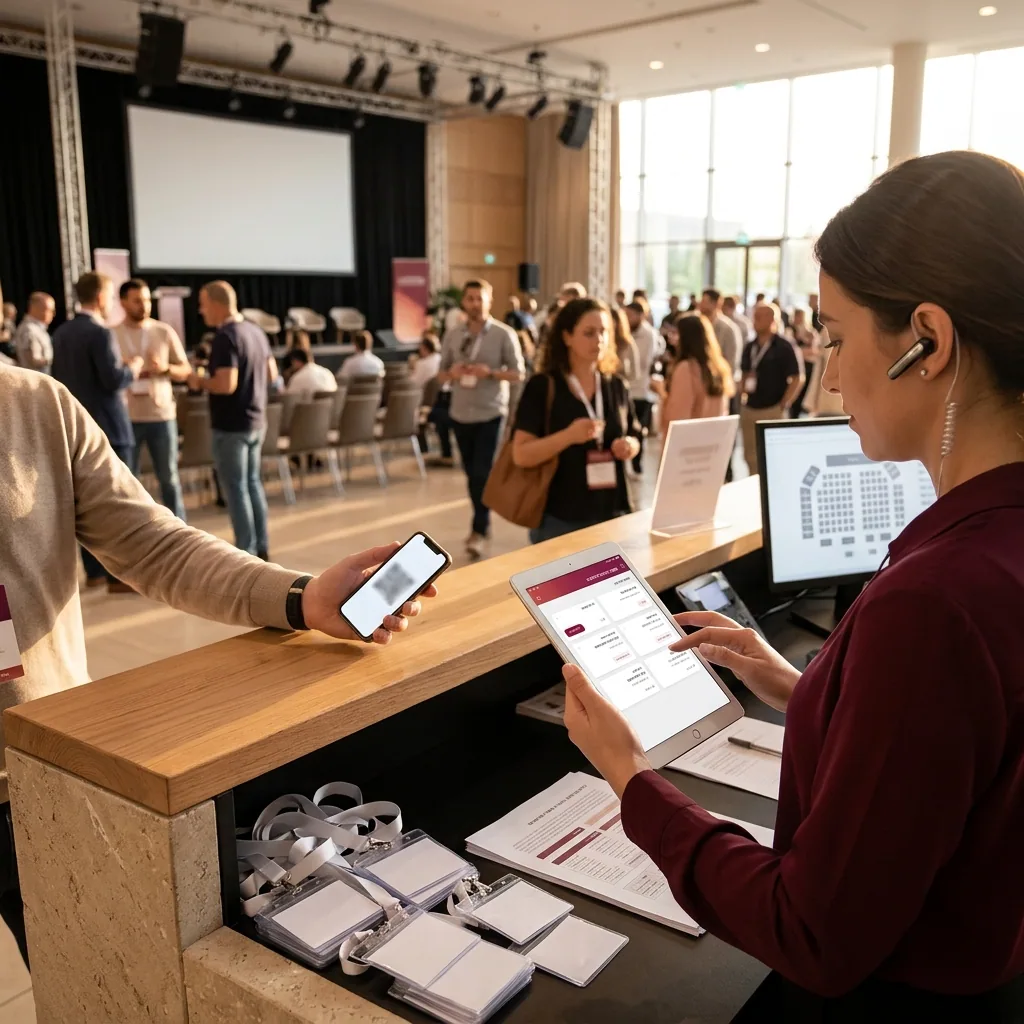
An event management system is a centralized software platform that consolidates attendee records, communication channels, ticketing workflows, and physical access control under a single operational interface. Rather than splitting critical event data across spreadsheets, independent mailing platforms, and printed guest sheets, an integrated system synchronizes every production phase in real time—from distributing branded digital invitations and tracking RSVPs to gate scanning and post-event reporting. This guide outlines how an end-to-end platform streamlines daily production workflows, eliminates repetitive manual labor, and mitigates critical operational risks on event day.
Corporate productions, professional conferences, and enterprise gatherings involve intricate logistics and unforgiving schedules. When production teams manage hundreds or thousands of attendees, any discrepancy in registration data creates entry bottlenecks, seating errors, and friction with corporate stakeholders.
—
Master Attendee Data: Eliminating Spreadsheet Fragmentation
Version sprawl across disconnected spreadsheet files represents one of the most persistent failure points in live event operations. When an account manager records a cancellation in one workbook, an on-site coordinator flags a VIP in another, and the catering vendor receives a third sheet lacking dietary updates, operational chaos inevitably spills into the venue. Centralized attendee data management eliminates this risk by establishing a single source of truth accessible to all authorized stakeholders.
Modern platforms streamline data onboarding by importing guest lists directly from spreadsheet files using structured templates or artificial intelligence models that normalize raw contact rows. These processing pipelines validate international phone numbers, separate compound names, and assign guests to designated groups or tiers automatically. Furthermore, Irua.app allows production leads to assign granular user roles and permission sets at either the account level or the individual event level. Gate staff, account managers, and external suppliers see only the operational data necessary for their specific roles, safeguarding attendee privacy and preventing accidental database overwrites.
Running multiple corporate productions in parallel demands strict operational boundaries between client profiles. Structuring team permissions properly prevents cross-account errors, as detailed in our guide on managing multiple events simultaneously.
| Operational Feature | Traditional Workflow (Spreadsheets) | Dedicated Event Management System |
|---|---|---|
| Change Tracking | Manual updates across local files; frequent overwrites | Cloud synchronization with timestamped audit logs |
| Access Permissions | Unrestricted distribution of complete spreadsheets | Role-based access control per staff member and vendor |
| Phone Validation | Spot checks; formatting errors discovered at dispatch | Automated format normalization and validation at import |
| External Ingestion | Manual copy-pasting from separate registration forms | Direct API webhooks and automated database sync |
—
Direct Messaging and RSVP Tracking via Modern Communication Channels
Gathering attendance confirmations manually through outbound phone calls strains production staffing and consistently delivers incomplete attendance figures. Similarly, conventional email campaigns suffer from low open rates and delayed responses. A modern communication workflow relies on the official WhatsApp Business API to distribute personalized, branded event communications directly to attendee devices, following standard protocols established on the Meta for Developers WhatsApp Platform. As an Official Meta Tech Provider, Irua.app supplies direct messaging infrastructure that secures high delivery rates for transactional updates and digital entry passes.
When a guest receives an interactive message containing a unique personal link, their RSVP selection updates the central database instantly without manual intervention. If an attendee cannot receive WhatsApp communications, the fallback pipeline automatically routes delivery via SMS and email with live delivery confirmation. Additionally, embedded conversational AI models can resolve repetitive attendee inquiries—such as venue parking guidelines, transit directions, and schedule specifics—using pre-configured event knowledge, substantially reducing the messaging burden on production coordinators. For an operational breakdown of this setup, review our technical guide on conference check-in and RSVP operations.
—
Rapid Access Control and Dynamic QR Code Scanning
The primary logistical bottleneck of any on-site production occurs at physical reception points. Concentrated participant arrivals within narrow time windows generate arrival surges that require rapid, foolproof gate processing. Implementing an individualized QR code ticketing workflow removes the delays inherent in manual alphabetical sheet searches and maintains rapid attendee flow.
Digital Wallet Passes: Apple Wallet and Google Wallet
Distributing entry passes compatible with Apple Wallet and Google Wallet simplifies check-in logistics for attendees and organizers alike. Guests add their personalized passes directly to their smartphones using standard specifications defined in the Apple Wallet Passes developer documentation. On the day of the event, passes present lock-screen notifications based on scheduled start times and geographical coordinates. Furthermore, digital passes update dynamically if room allocations, gate assignments, or schedules shift, eliminating lost PDF attachments and accelerating line throughput.
Multi-Device Concurrent Scanning and Access Zoning
- Anti-Passback Safeguards: Each QR code functions as a single-use credential. The moment an entry pass scans successfully, the database flags the record as redeemed, preventing unauthorized credential sharing. Scan terminals emit immediate visual and auditory alerts for duplicate or invalid credentials.
- Hardware Independence: Scanning infrastructure supports unlimited concurrent mobile devices. On-site staff can operate the check-in scanner on standard iOS and Android smartphones or tablets without requiring specialized barcode hardware.
- Peak Surge Throughput: In high-density deployments exceeding 3,500 attendees arriving across a 25-minute window, concurrent multi-device scanning maintains average check-in wait times below 30 seconds per attendee.
- Zoned Access Verification: Scanning an entry pass instantly displays the attendee's designated hall, gate, or seating zone, preventing unauthorized entry into VIP rooms, production backstages, or restricted conference tracks.
- Rapid Fallback Lookup: If an attendee cannot present their mobile code at the gate, staff locate and process the registration within seconds via telephone number or name lookup in the web reception dashboard.
Maintaining end-to-end gate oversight is critical for venue safety, as covered in our analysis of real-time attendance tracking and event access control.
—
Integrated Ticketing, Merchant Checkout, and Payment Processing
Commercial conferences, masterclasses, and ticketed corporate functions require integrated payment collection. Building native checkout functionality into an event management system eliminates disconnected external payment gateways and manual reconciliation spreadsheets.
A unified ticketing module processes digital wallets including Apple Pay and Google Pay, alongside Visa, Mastercard, American Express, Diners Club, and debit cards. Event directors can set customized cancellation policies, enforce ticket purchase limits per transaction, and manage tiered inventory limits across specific conference days or tracks. When refunds are approved, event managers initiate them directly from the admin dashboard, returning funds automatically to the original payment method without third-party portal transfers. For deeper operational criteria on choosing financial infrastructure, consult our guide on event ticketing system selection.
—
Digital Seating Arrangement and Supplier Coordination
For gala dinners, formal corporate gatherings, and assigned-track summits, table placement represents a recurring operational pressure point. Last-minute guest roster revisions on the morning of an event easily cause miscommunication between gate greeters, venue captains, and floor hosts.
- Digital Floor Plan Modeling: Build a scaled venue floor plan outlining staging, service pathways, and tables of varying dimensions.
- Targeted Seating Assignments: Allocate attendees manually or systematically based on department, organizational hierarchy, partner tiers, or registration categories.
- Vendor Coordination Reports: Generate structured catering sheets specifying exact table numbers, guest counts, and recorded dietary constraints including vegan, kosher, and allergen preferences.
- Live Reception Synchronization: The instant a guest clears entry scanning, gate staff immediately view the assigned table number on the console, even if seating changes occurred minutes prior to door opening.
—
Performance Analytics and Post-Event Stakeholder Reporting
The completion of on-site operations does not mark the conclusion of production responsibilities. Enterprise clients, marketing leaders, and corporate sponsors demand precise data to measure event performance and return on investment. Relying on rough headcounts fails to meet modern organizational standards.
A consolidated post-event report delivers objective, timestamped metrics: entry velocity charts broken down by 15-minute increments, gate load distribution, verified no-show counts against registered confirmations, and walk-in arrivals logged without pre-registration. These empirical metrics give agencies concrete verification of operational efficiency, identify venue bottlenecks, and provide actionable benchmarks for future production planning.
Operating for over a year, Irua.app has powered hundreds of corporate productions for leading enterprise brands, including Mercedes-Benz, Maserati, Hyundai, Colmobil, Maccabi Israel, Auto Chen, and Diesel. The infrastructure maintains a strict 99.999% server availability SLA during active productions to guarantee uninterrupted gate scanning during peak entry surges.
Single corporate event packages start at ₪980, including full operational onboarding support from the platform team and an included message balance. Production teams can also create a free account independently, configure custom registration journeys, and launch branded messaging directly.
To discover how a unified platform streamlines operations for your upcoming production, get in touch with our team.
—
Common questions
What happens if an attendee arrives at the venue without their QR code?
Gate teams do not depend strictly on mobile entry passes. Through the web-based reception console accessible on any smartphone, tablet, or laptop, staff search for the attendee using their name or registered phone number. The console displays registration status, assigned permissions, and seating arrangements instantly, allowing manual verification with a single tap.
Can the platform handle multi-day conferences with parallel tracks?
Yes. The system accommodates multi-day schedules, distinct program dates, and parallel operational tracks. Dynamic QR credentials can be configured to grant access across all conference days or restricted to specific dates and workshops, enforcing customized inventory limits and track-level validation per credential.
How does the system communicate with guests who do not use WhatsApp?
When a WhatsApp delivery attempt fails because a recipient does not maintain an active WhatsApp account, the platform automatically routes the invitation, dynamic links, and ticket details via standard SMS and email. The administrative interface provides real-time delivery status monitoring across all communication channels.
Can the event management system integrate with internal corporate CRM databases?
Yes. The platform connects to enterprise CRM systems and marketing databases through REST APIs and real-time Webhooks. Attendee records synchronize automatically from internal platforms into the event roster, while live check-in statuses and post-event attendance metrics export back to the organization's central database.
From the blog
Keep reading
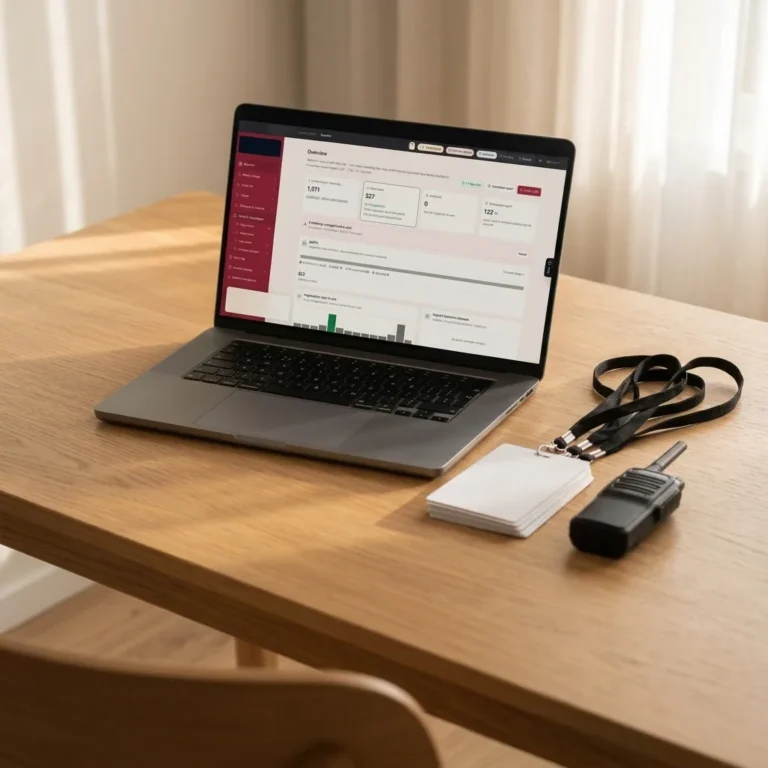
Event Management Software No Subscription: White-Label Control
Discover event management software with no subscription fees. Run white-label registration, automated WhatsApp RSVPs, and live QR check-ins per event.
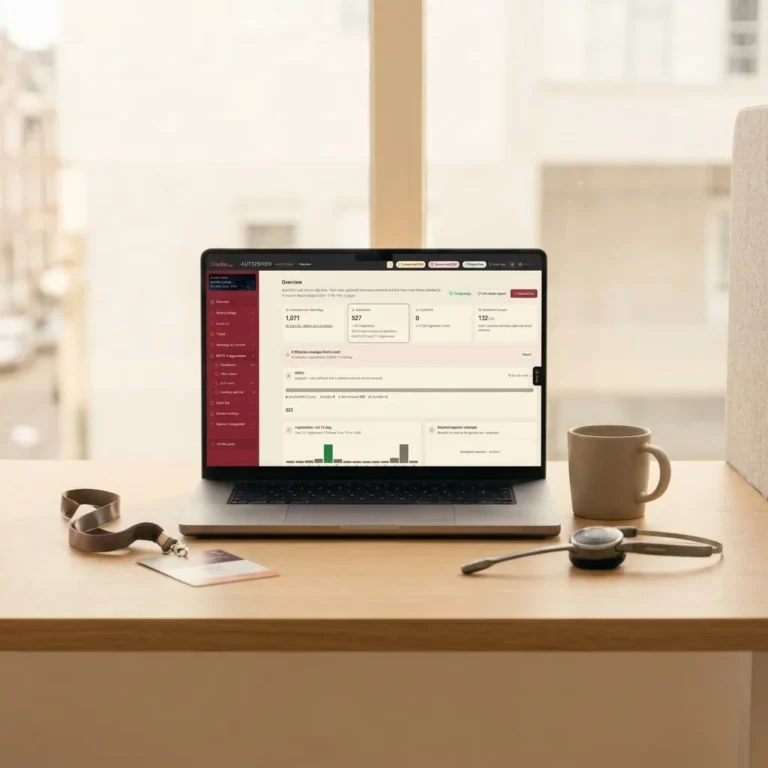
Managing Multiple Events Simultaneously: 3 Operational Rules for Peak Production Weeks
Learn how to manage multiple events simultaneously without errors using unified data infrastructure, role-based access, and automated check-ins.
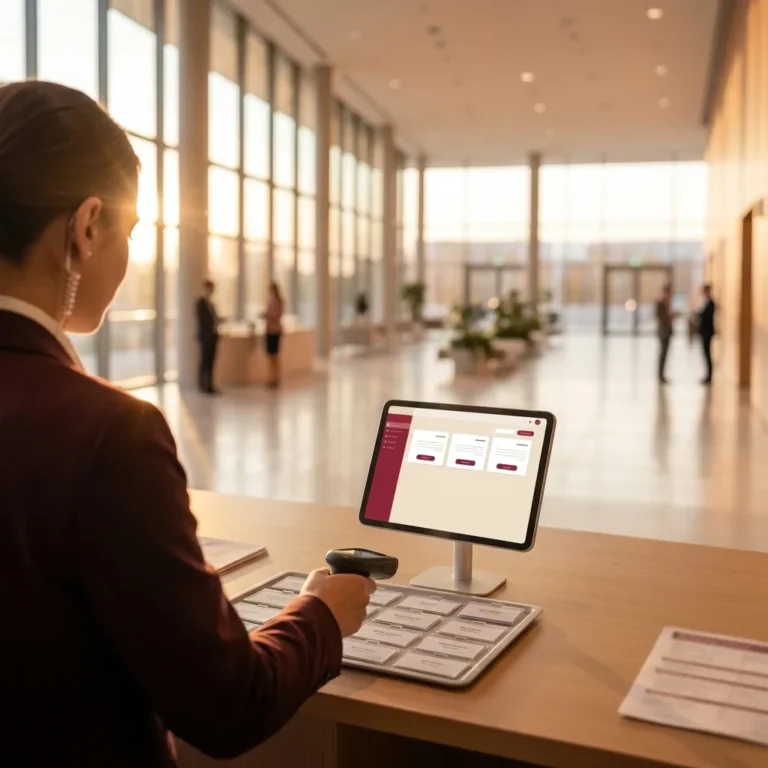
Conference Check-In Management: 3 Operational Principles for Zero-Queue Entry
Master conference check-in management with role-based desk setups, local-first offline sync, and strict change control to eliminate guest bottlenecks.